
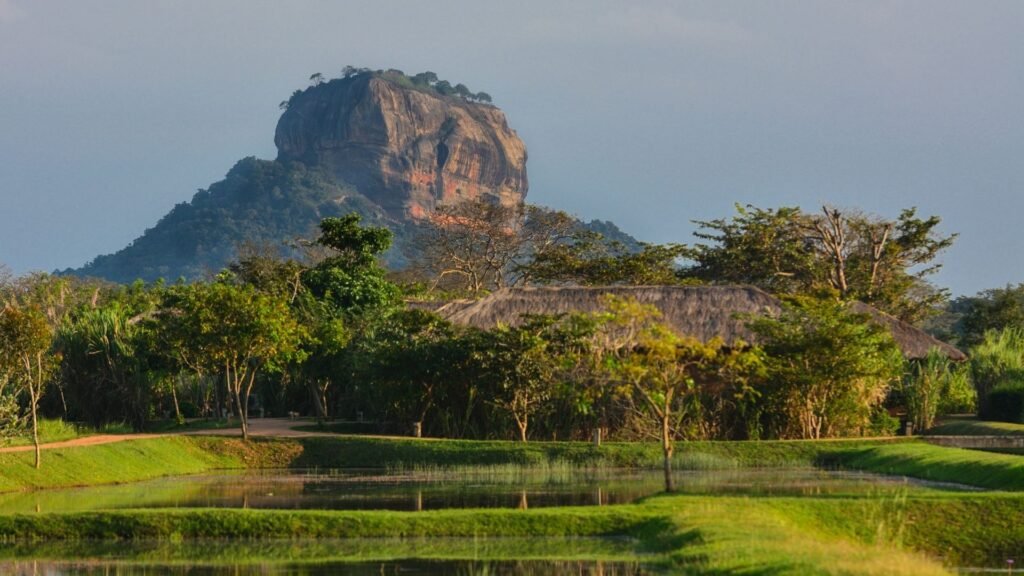
Sigiriya Rock Fortress stands as one of Sri Lanka’s most iconic landmarks. This ancient rock fortress, also known as Lion Rock, rises nearly 200 meters from the surrounding plains in Sri Lanka’s Cultural Triangle. The 5th-century palace complex perched atop this massive rock outcrop is a UNESCO World Heritage Site and architectural marvel. Here’s everything you need to know for visiting this extraordinary place.
The History Behind Sigiriya
Understanding Sigiriya’s dramatic history adds depth to your visit. In 477 AD, King Kashyapa seized power by overthrowing his father, King Dhatusena. Fearing revenge from his half-brother Moggallana, the rightful heir, Kashyapa built his palace atop Sigiriya Rock, believing its height and defensive features would protect him.
For 18 years, Kashyapa ruled from this sky-high palace, creating one of ancient Asia’s most ambitious architectural achievements. The complex included elaborate water gardens, frescoes, a mirror wall covered in ancient graffiti, and the massive lion gateway that gave the rock its name.
In 495 AD, Moggallana returned with an army. During battle, Kashyapa’s elephant turned, leading his troops to believe he was retreating. His army fled, and Kashyapa, realizing defeat was inevitable, took his own life. Moggallana moved the capital back to Anuradhapura, and Sigiriya became a Buddhist monastery until the 14th century.
The site was gradually abandoned and forgotten by all except local villagers until British colonial explorer Jonathan Forbes “rediscovered” it in 1831. Archaeological work began in the 1890s, revealing the site’s significance. Today, Sigiriya stands as a testament to ancient engineering, artistic achievement, and one king’s paranoid ambition.
Planning Your Climb
Best Time to Visit
Timing your visit significantly affects your experience. The site opens at 7:00am, and arriving at opening time is ideal. Early morning offers cooler temperatures for the climb, softer light for photography, and fewer crowds. By 9:00am, the rock starts to get busy and the heat builds.
Alternatively, late afternoon visits from 3:00pm onward avoid the worst midday heat. However, afternoon sun directly hits the rock face, making the climb hotter than early morning. The site closes at 5:30pm, giving limited time if you arrive too late.
Avoid weekends and public holidays when Sri Lankan domestic tourists visit in large numbers. The rock can become uncomfortably crowded, with queues forming at narrow sections of the climb. Weekday mornings offer the quietest experience.
What to Bring
Water is essential. The climb is strenuous, the heat intense, and dehydration a real risk. Bring at least one liter per person, more if visiting in midday heat. Small bottles are sold near the entrance but are overpriced.
Wear a hat and apply high-SPF sunscreen. Much of the climb is exposed to direct sun with no shade. Sun protection is crucial, especially on your face, neck, and arms. Reapply sunscreen if you sweat heavily.
Comfortable walking shoes with good grip are important. The stairs are uneven, some sections are steep, and metal staircases can be slippery. Flip-flops or sandals are unsuitable—you need proper footwear.
Bring a camera, but ensure it’s secure. The climb involves both hands in some places, so a camera strap or small bag is necessary. Phone cameras work fine for most visitors.
Consider bringing insect repellent. Wasps sometimes nest in rock crevices, particularly during certain seasons. While not always present, they can be aggressive if disturbed. Don’t swat at them—stay calm and they usually leave you alone.
The Climb: What to Expect
Water Gardens and Approach
The climb doesn’t start immediately at the rock base. First, you walk through the extensive water gardens that once surrounded the palace complex. These symmetrical gardens include pools, fountains (some still functional during rainy season), and landscaped areas demonstrating sophisticated 5th-century hydraulic engineering.
The gardens are pleasant for strolling, offering photo opportunities with the rock looming in the background. Ancient pathways, ponds, and foundation remnants give sense of the site’s former grandeur. Take time here rather than rushing straight to the rock—the gardens are part of Sigiriya’s UNESCO recognition.
The Ascent Begins
The climb from rock base to summit involves approximately 1,200 steps. This sounds daunting, but the steps are broken into sections with rest platforms, making it manageable for most fitness levels. The climb typically takes 1-1.5 hours up, less coming down.
Initial steps are gradual, cut into the rock or built as iron staircases attached to the cliff face. Early sections wind through boulders and overhangs, providing shade and interesting rock formations.
Sigiriya Frescoes
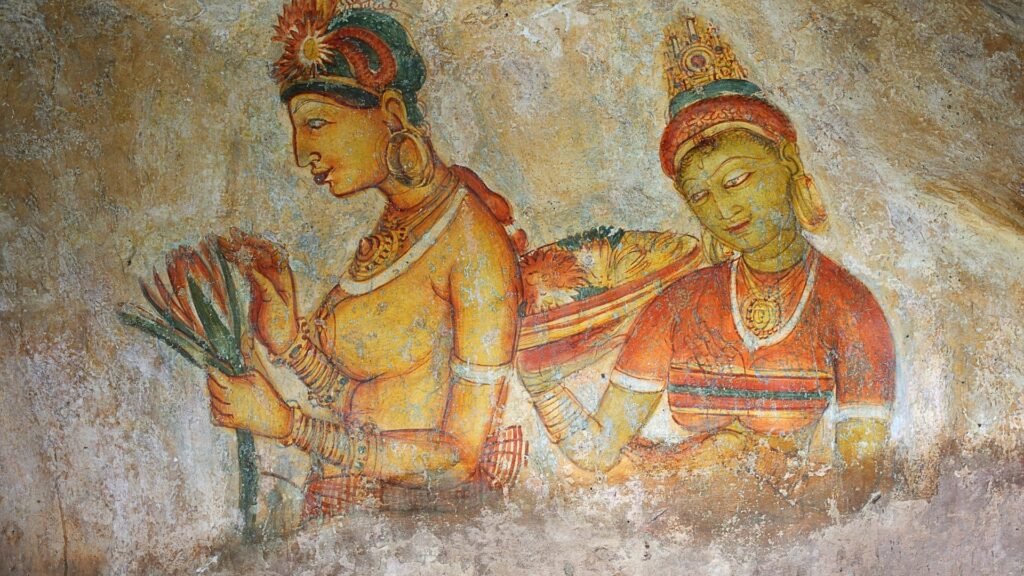
About halfway up, a spiral metal staircase leads to a protected pocket in the rock face where ancient frescoes remain. These vibrant paintings depict celestial maidens and are over 1,500 years old. Originally, hundreds of frescoes covered much of the western rock face. Today, only about 21 survive.
The frescoes are remarkably well-preserved, with colors still vivid. The style shows Indian influence but with distinct Sinhalese characteristics. Photography of the frescoes is prohibited to prevent damage from camera flashes. Respect this rule—preservation matters more than getting photos.
The viewing area gets congested when groups arrive. If crowded, wait a few minutes for your turn to see the paintings properly. The spiral staircase is narrow and sometimes has queues during busy periods.
Mirror Wall
After the frescoes, the path continues along the Mirror Wall. This smooth wall, once polished so highly it served as a mirror, now bears ancient graffiti. Visitors from the 6th century onward scratched poems and observations into the wall—the world’s oldest graffiti collection.
Most inscriptions are in Sinhala, but they reveal how people throughout history have responded to Sigiriya’s beauty. Some comments praise the frescoes, others make poetic observations about love and life. Adding modern graffiti is strictly forbidden and results in heavy fines.
The path along the mirror wall is narrow with a sheer drop on one side, though railings provide safety. Those with height anxiety should take this section slowly and focus forward rather than looking down.
Lion Platform and Final Ascent
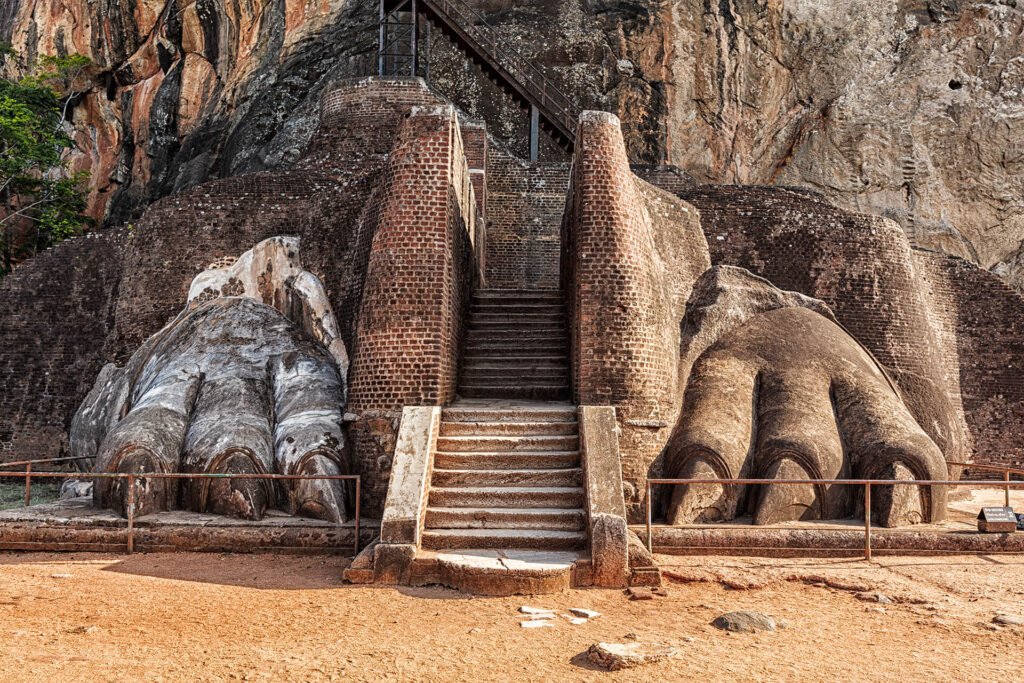
The path emerges onto the Lion Platform, a large terrace where the massive lion gateway once stood. Only the lion’s paws remain today—enormous stone paws that once flanked a staircase that rose through the lion’s mouth to the summit.
Imagine the psychological impact on visitors 1,500 years ago, climbing through a giant lion’s mouth to meet the king. It was designed to intimidate and impress, and even the remaining paws achieve that effect.
From here, the final section involves steep metal staircases attached to the rock face. This is the most challenging part—steep, exposed, and sometimes windy. The staircases are stable and safe, but those uncomfortable with heights find this section difficult. Take your time, use the handrails, and don’t look down if heights make you nervous.
The Summit
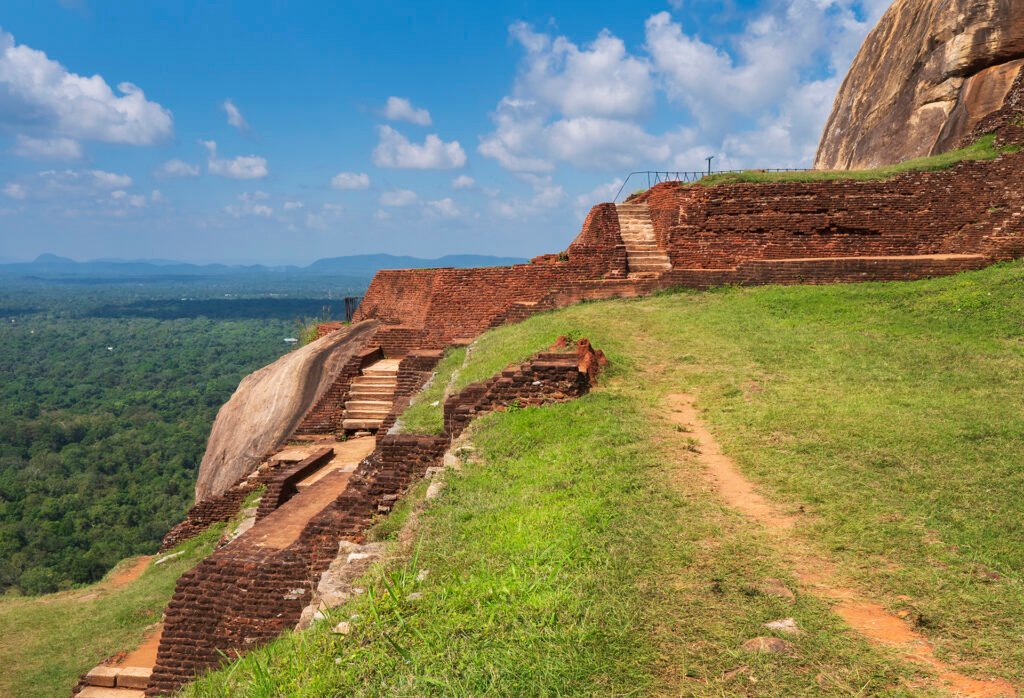
Reaching the top reveals the palace ruins spread across the summit’s 1.6 hectares. Foundation walls outline rooms, cisterns held water, and the throne platform sits at the rock’s highest point. Views in all directions are spectacular—endless green plains dotted with rocky outcrops stretching to distant mountains.
The palace layout demonstrates remarkable planning. Water systems channeled rainwater into cisterns, ensuring supply during dry periods. The king’s swimming pool remains visible, as do various chambers and terraces.
Spend time exploring the summit. Walk the perimeter for different viewpoints, find the throne area, and imagine this complex functioning as a royal residence. The wind at this height provides welcome relief from the climb’s exertion.
The summit can accommodate many people but feels crowded when multiple tour groups arrive simultaneously. Early morning or late afternoon typically offer more space to explore without crowds.
The Descent
Coming down uses the same route. Take care on steep sections—many accidents happen during descent when people rush or become overconfident. The same metal staircases and narrow paths require attention going down, perhaps more so than ascending.
Allow 45 minutes to an hour for descent. This includes time to navigate steep sections carefully and perhaps stop at viewpoints you missed ascending.
Practical Information
Entry Fees and Tickets
Sigiriya charges separate fees for foreign tourists and Sri Lankan residents. Foreign tourist tickets cost significantly more. Tickets are purchased at the entrance gate before you begin the walk through the gardens.
Keep your ticket—it may be checked at various points. Some visitors try to avoid fees by climbing from the back, which is illegal, dangerous, and disrespectful to the site’s heritage.
Guides
Official guides are available at the entrance. While not mandatory, a knowledgeable guide enhances understanding of Sigiriya’s history, architecture, and artistic significance. They can point out details you’d otherwise miss and explain the historical context.
Guides have set fees, so agree on the rate before starting. If hiring a guide, choose licensed guides identifiable by official badges. Unofficial guides may offer services cheaper but might provide inaccurate information.
Many visitors explore independently using guidebooks or apps. The site is well-marked, and you won’t get lost. However, you’ll miss historical and architectural nuances a good guide provides.
Facilities
Toilets are available near the entrance before you start the climb. No facilities exist on the rock itself, so use these before beginning your ascent.
Small shops near the entrance sell water, snacks, and souvenirs. Prices are inflated compared to outside the site. Bring water from your hotel if possible.
Luggage storage is available near the entrance if you’re arriving with bags, though most visitors don’t need this if on organized tours.
Accessibility
Sigiriya is not wheelchair accessible. The climb involves steep stairs, narrow passages, and metal staircases unsuitable for anyone with significant mobility limitations. Those with knee or heart conditions should consult doctors before attempting the climb.
Elderly visitors and children regularly climb Sigiriya, but assess your fitness realistically. The climb is physically demanding, particularly in heat. If you have concerns, consider that getting partway up and returning is perfectly acceptable—there’s no requirement to reach the summit.
Photography Tips
Early morning light provides the best photography conditions. The rock faces west, so morning sun illuminates the ascent route beautifully. Afternoon sun creates harsh shadows and backlighting challenges.
For photos of the entire rock from a distance, the approach through the water gardens offers classic angles. The reflection in pools (when filled during wet season) creates beautiful compositions.
Summit views are spectacular in all directions. Wide-angle lenses capture the panorama, though standard phone cameras work fine. The green plains and distant mountains create layered landscape shots.
Remember that photography is prohibited at the frescoes. Respect this completely—flash photography damages these irreplaceable 1,500-year-old paintings.
For people photos, early morning or late afternoon provides flattering light. Midday sun creates harsh shadows on faces. The summit’s wind can mess with hair—consider this for portrait shots.
What Else to See Near Sigiriya
Pidurangala Rock
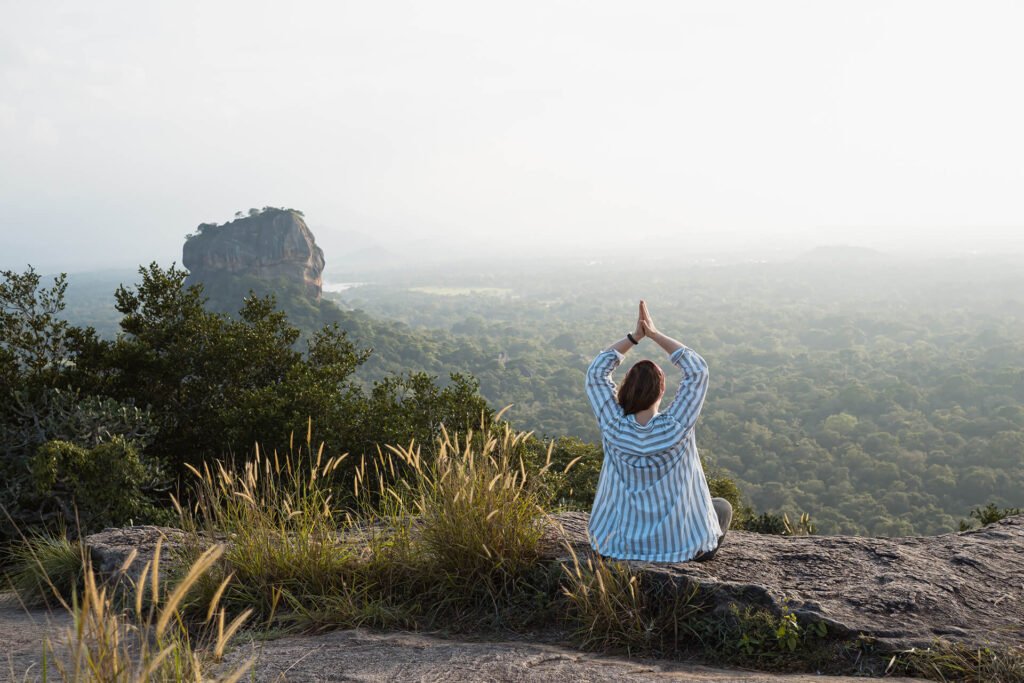
Just 2 kilometers from Sigiriya, Pidurangala Rock offers an alternative climb with spectacular views of Sigiriya itself. The climb is shorter but steeper in places, involving some scrambling over boulders near the summit.
Pidurangala is particularly popular for sunrise, when early light illuminates Sigiriya Rock across the plains. It’s less crowded than Sigiriya, cheaper to enter, and provides unique perspective on Sigiriya from across the valley.
The summit has a large reclining Buddha statue and a small temple. As with all religious sites, dress modestly and remove shoes when required.
Dambulla Cave Temple
About 20 kilometers from Sigiriya, Dambulla’s cave temples contain stunning Buddha statues and frescoes within natural rock caves. This is another UNESCO site and combines easily with Sigiriya as a day’s sightseeing.
The cave complex sits atop a hill requiring a climb of about 15 minutes. Five caves contain over 150 Buddha statues and extensive frescoes covering ceilings and walls. It’s one of Sri Lanka’s best-preserved ancient religious sites.
Village Experiences
Several operators offer village tours around Sigiriya, including bullock cart rides, visits to farming families, and traditional meals. These provide cultural context and support local communities. Choose reputable operators who genuinely benefit villagers rather than exploiting them for tourist entertainment.
Where to Stay
Sigiriya village has accommodation ranging from budget guesthouses to luxury hotels. Many hotels offer views of Sigiriya Rock from their grounds or rooms, which is particularly beautiful at sunrise and sunset when the rock changes colors.
Staying near Sigiriya allows early morning climbs before crowds and heat build. You can reach the entrance by tuk-tuk or even walk from nearby accommodations.
Some visitors base themselves in Dambulla, which has more accommodation options and sits centrally for exploring both Sigiriya and other Cultural Triangle sites. Dambulla to Sigiriya is about 30 minutes’ drive.
Safety Considerations
The climb is safe if you follow basic precautions. The main risks are heat exhaustion, dehydration, and falls due to rushing or inattention.
Drink water regularly during your climb, not just when you feel thirsty. Dehydration symptoms include dizziness, headache, and extreme fatigue. If you experience these, rest in shade, drink water, and descend if symptoms don’t improve.
Wasps occasionally nest in rock crevices. If you encounter them, stay calm and move slowly. Swatting provokes them. Wasp presence varies seasonally and isn’t always an issue, but awareness helps if you do encounter them.
Watch your step, especially on descent. The stairs are uneven, metal staircases can be slippery, and rushing causes accidents. Use handrails where provided.
Monkeys occasionally appear around the site. Don’t feed them or leave bags unattended. They can be aggressive if they think you have food.
Cultural and Historical Significance
Sigiriya represents a remarkable achievement in ancient urban planning and architecture. The integration of nature and architecture, the sophisticated water management system, and the artistic accomplishments demonstrate the advanced civilization that existed in 5th-century Sri Lanka.
The site’s UNESCO recognition acknowledges its “outstanding universal value.” Sigiriya combines architecture, painting, landscaping, and poetry in a unique synthesis that represents a significant period in Sri Lankan history.
When visiting, you’re experiencing more than a climb with nice views. You’re walking through a complex that demonstrates human ambition, engineering skill, artistic expression, and political intrigue from 1,500 years ago. Every step follows paths ancient kings, monks, and pilgrims have walked for centuries.
Final Tips for Your Visit
Start early. This cannot be overstated. The difference between a 7:00am and 10:00am visit is enormous in terms of crowds, heat, and overall experience.
Take your time. Rushing misses details and increases safety risks. Sigiriya rewards those who pause to appreciate the gardens, examine the architectural features, and absorb the atmosphere.
Bring more water than you think you need. The heat and exertion require constant hydration. It’s better to carry extra water than run out partway through your visit.
Respect the site. This is a precious archaeological and historical treasure. Don’t touch frescoes, add graffiti, litter, or damage anything. Future generations deserve to experience Sigiriya as you have.
Consider the historical context. Reading about Kashyapa’s story before visiting makes the experience richer. Understanding why this palace was built here, how it functioned, and what happened to its builder adds layers of meaning to your climb.
Sigiriya is often described as the Eighth Wonder of the World, and while that’s marketing hyperbole, the description isn’t entirely unwarranted. Few ancient sites combine natural drama, architectural ambition, artistic achievement, and historical intrigue quite like this towering rock fortress in central Sri Lanka.